
Bobber Buddies
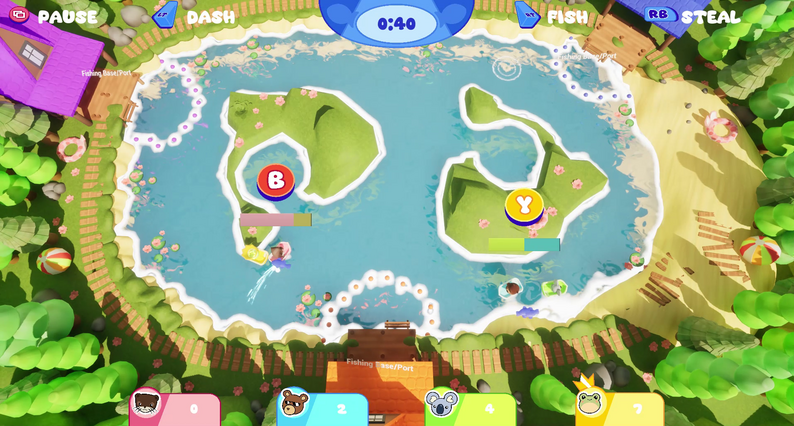
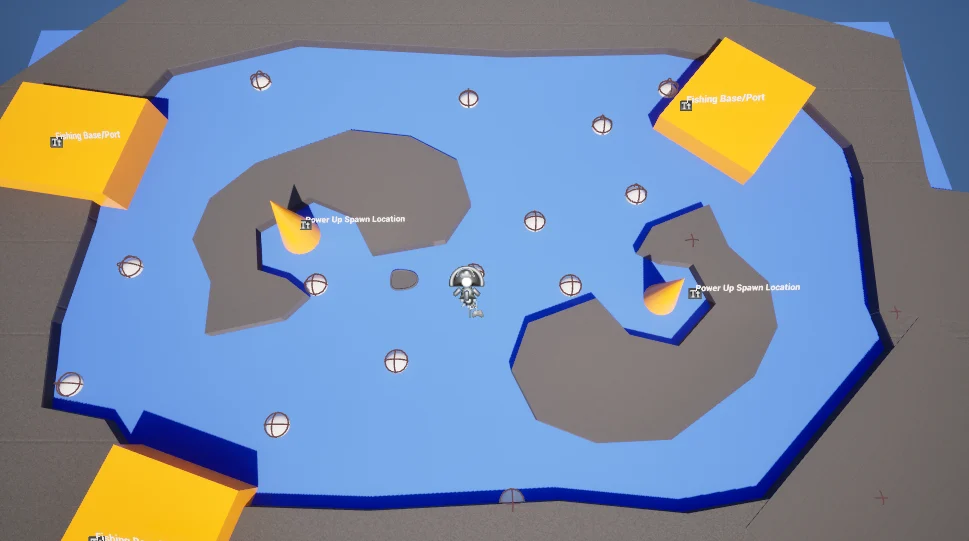
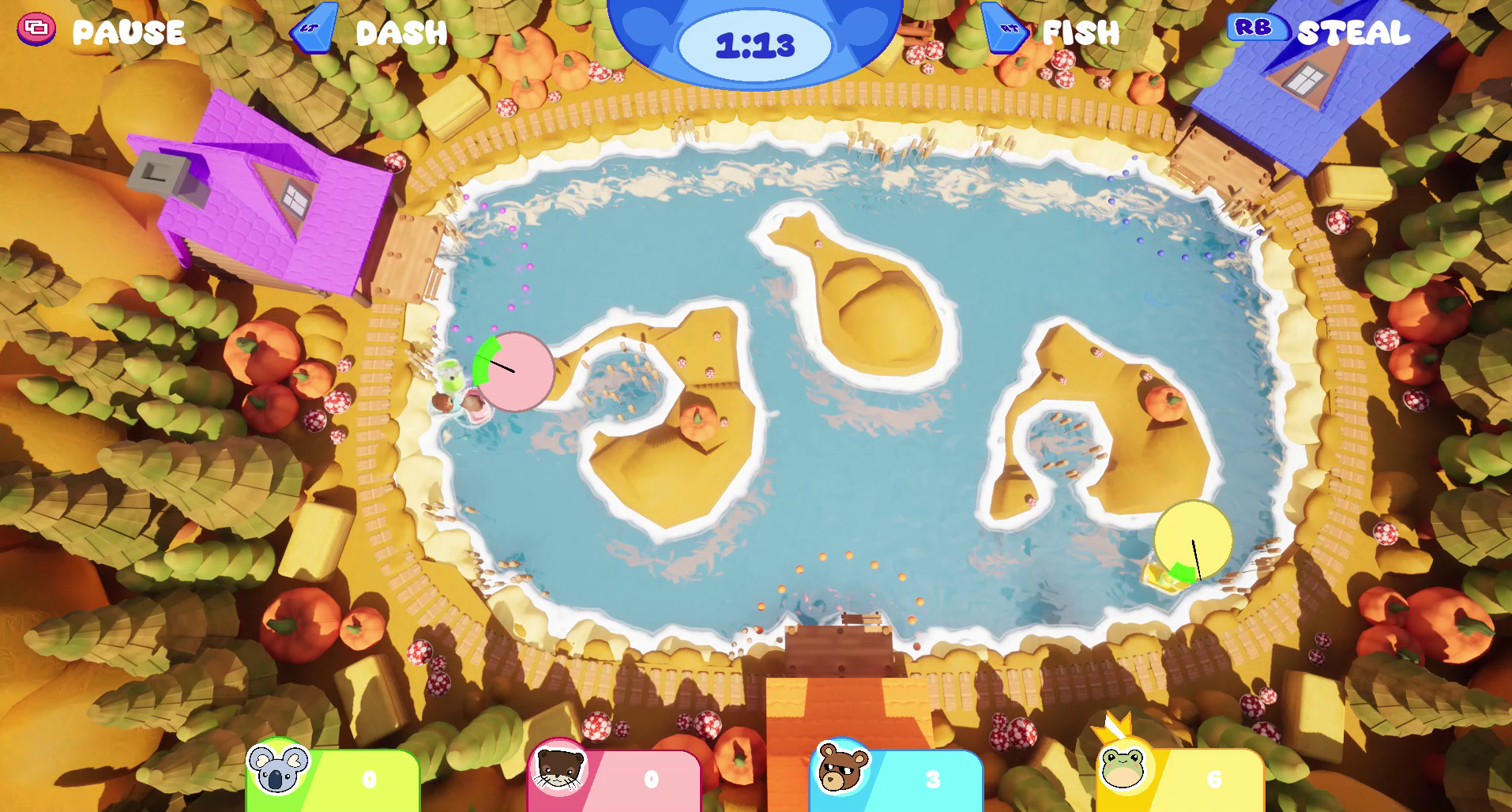
Bobber Buddies was a collaborative final year module where I worked with a team of 17 students across design, art and programming. I acted as the design lead, managing a small team of 2 other designers, working on the Game Development Document to design the core gameplay systems and created the layouts for the maps seen in the game.
Above is the trailer and below a link to the game's itch page.
Itch Link: https://ffionmaybe.itch.io/bobber-buddies
Project Breakdown:
- 9 weeks working as a team
- Built in Unreal Engine 5
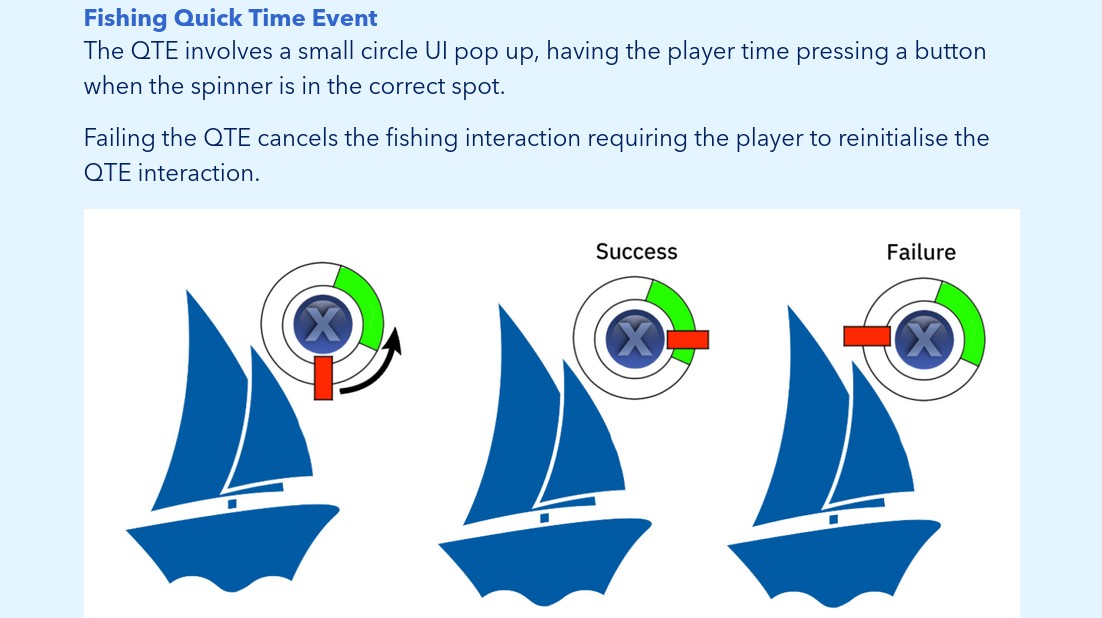
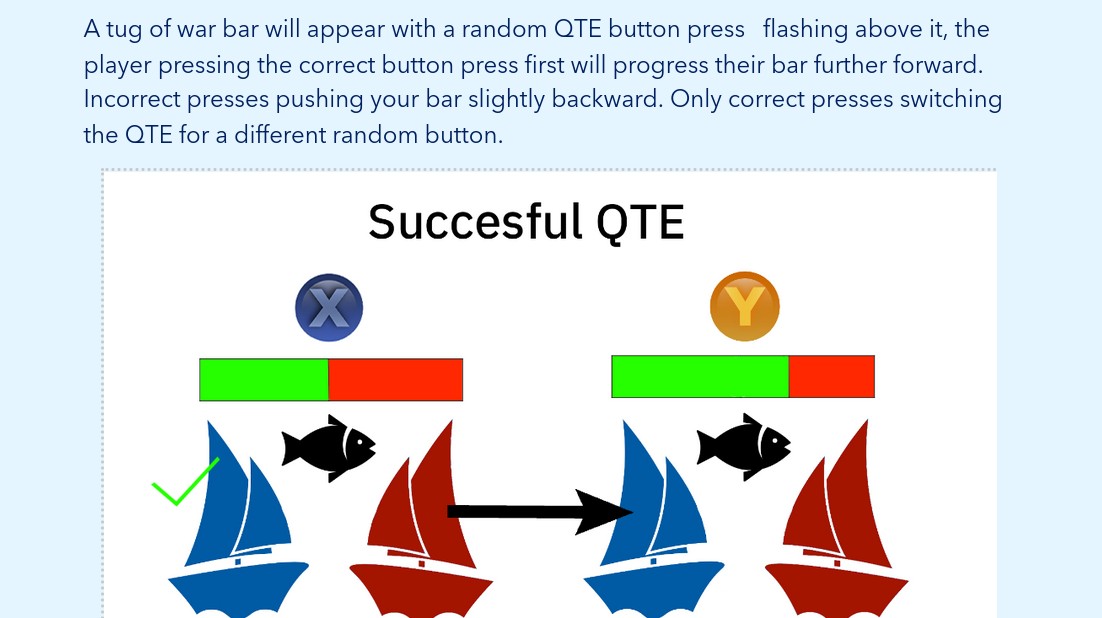
- Designed mechanics diagrams and documentation for the GDD
- Created level blockouts in collaboration with the art team
- Acted as Design Lead, managing a small team of designers and acting as the voice of design in meetings
- Used Microsoft Teams for task assignment and tracking, as well as communication between disciplines
Reflections
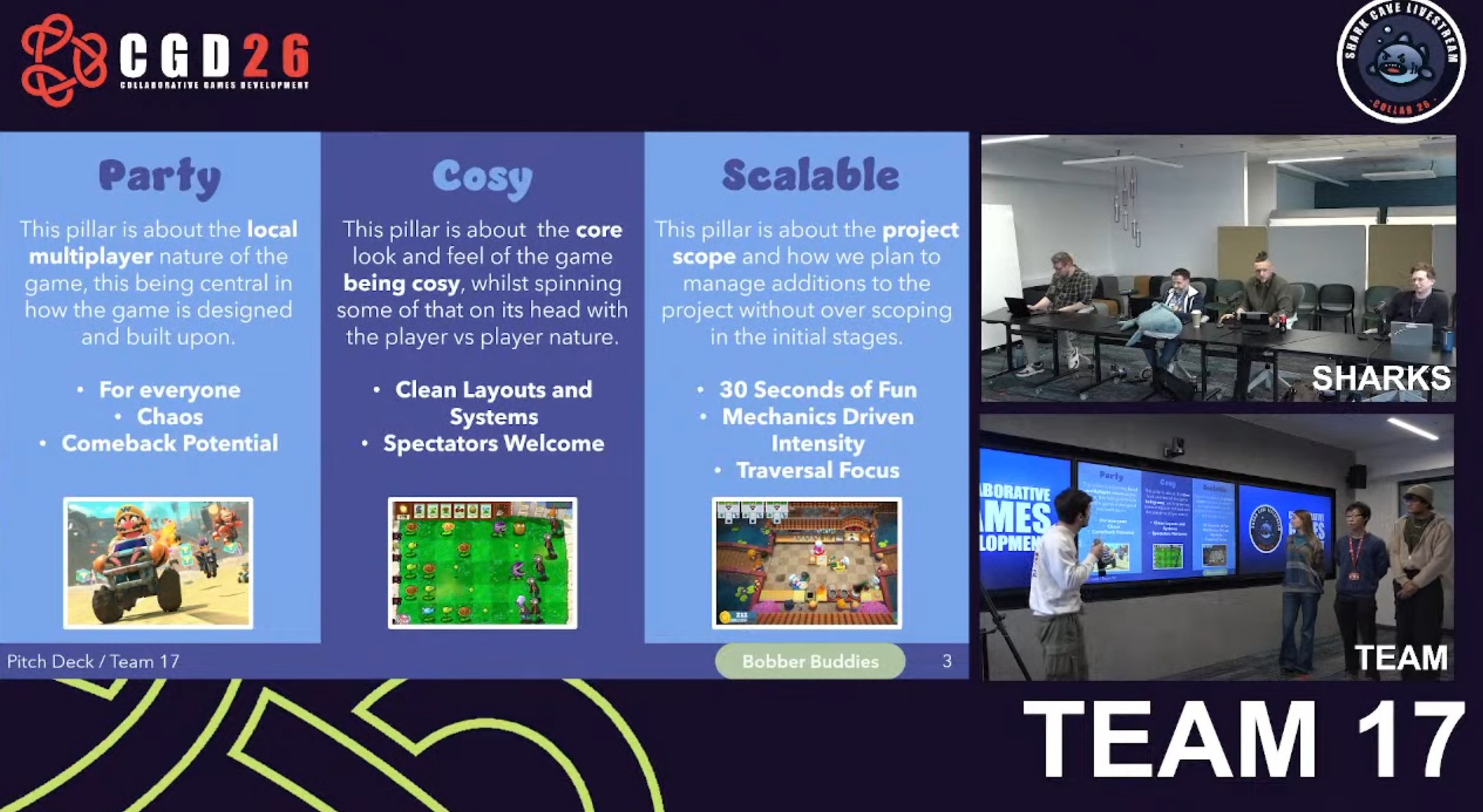
Advocating for Design Intent - Working in a team means your design ideas won't always be agreed upon immediately. At one point I strongly believed we should move the bases from being player owned to fish dependent, making my case using feedback we had received from our pitch and examples from other games, instead of just pushing harder. The project lead did eventually come around to this idea, but the bigger takeaway was learning to advocate for design with evidence and reasoning over opinion.
Communicating through Documentation - A big challenge with this project was getting people to understand concepts through the GDD, I was always happy to help gaps in understanding, going back and clarifying the Documentation further, but the importance of detailed yet concise GDDs became apparent to me, especially as I compared mine to Dirty Bomb's GDD example.
Scope and Leadership - Managing cut content was something that fell on me as a lead, this time the content I was cutting was work other designers might have spent the last couple weeks on. For example power ups were ultimately pivoted to environmental effects after playtesting, however this meant explaining to those designers why their work was being cut, and having empathy to imagine what it's like having your work suddenly not be "good enough for the game". In this case it was getting across that it wasn't a fault on their part or the work they produced, rather a reflection on the game and how it was progressing.