
Cagliostro
Cagliostro is a modded level for Call of Duty 4: Modern Warfare. Set in the real world location of Kenilworth Castle, the goal was to create a prequel mission to Blackout from the campaign, where Price builds trust in the player. The project taking a total of 17 days.
What I did:
- Quickly designed, prototyped and refined on level script using Infinity Ward's C-style scripting language GSC
- Designed around stealth gameplay through layout and scripted animations & sequences
- Designed systems with player choice in mind (using fail states to skip stealth combat)
- Created level geometry based on a real world location (Kenilworth Castle), adhering to real world metrics
- Authored narrative sequences using AI behaviour and animations and audio systems to deliver story through gameplay
Scripted Sequences
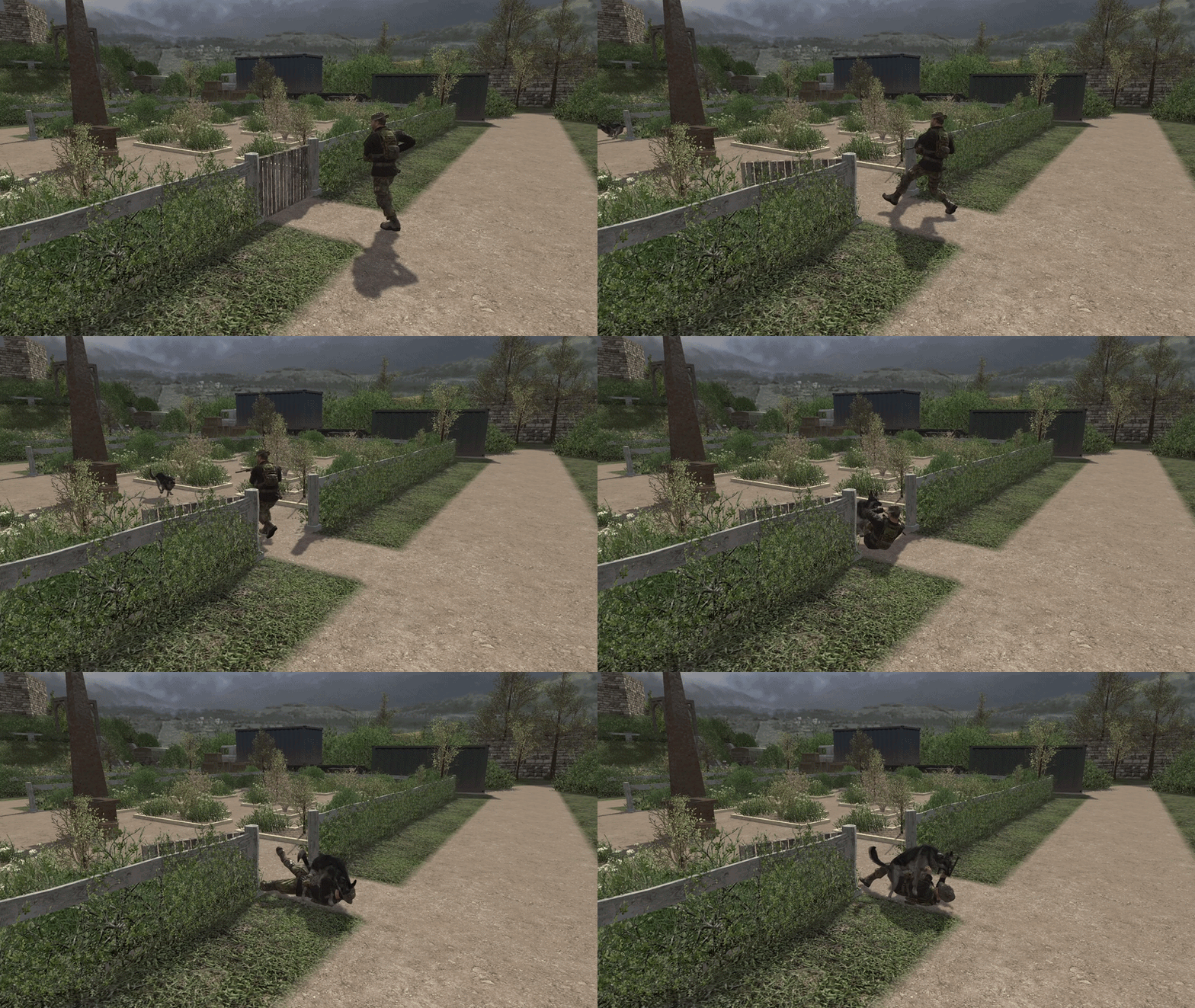
Surprise
I start the mission with a surprise. The dog doing 2 things here: showing themselves as a serious threat, whilst also providing the player with an option to save Price.
Redirection
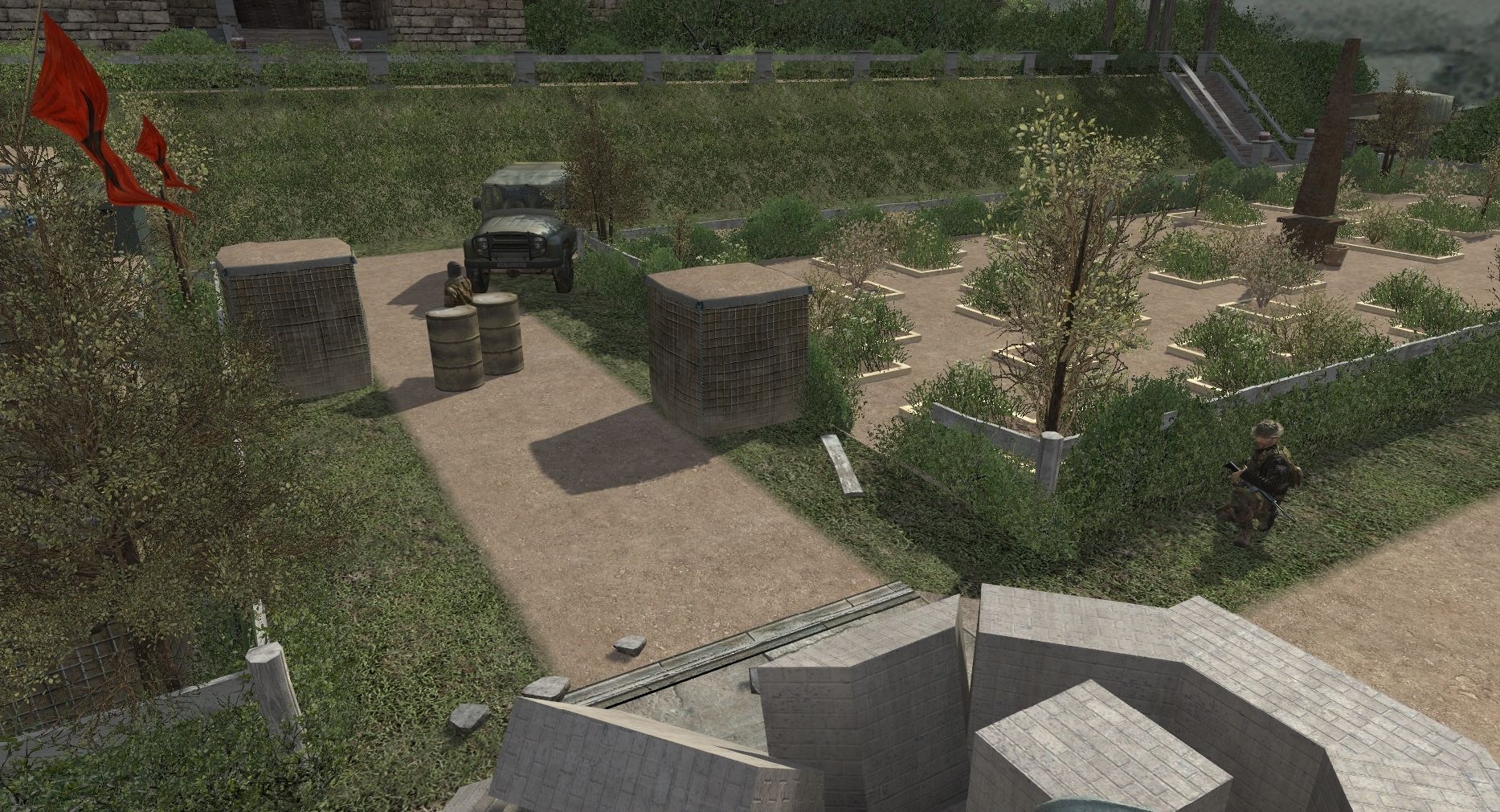
I then block the player's desired path through the garden. Using AI placement and geometry to create the problem and provide the solution.
Telegraphing
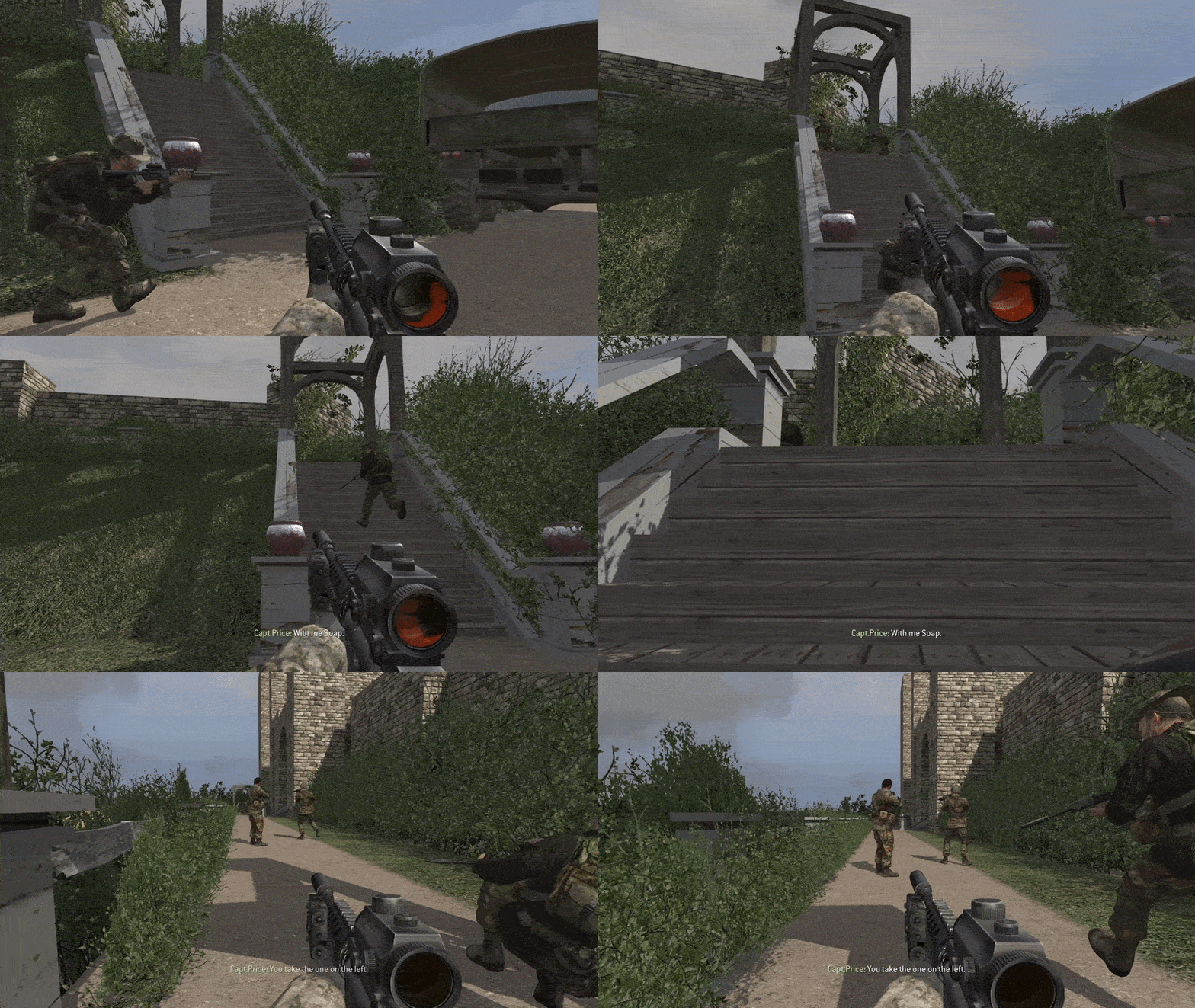
Reaching the stairs, 2 guards run past, followed by Price chasing after them. This forcing the player to react to what is otherwise a linear scripted sequence, and once again encouraging the player to work with Price.
Framing
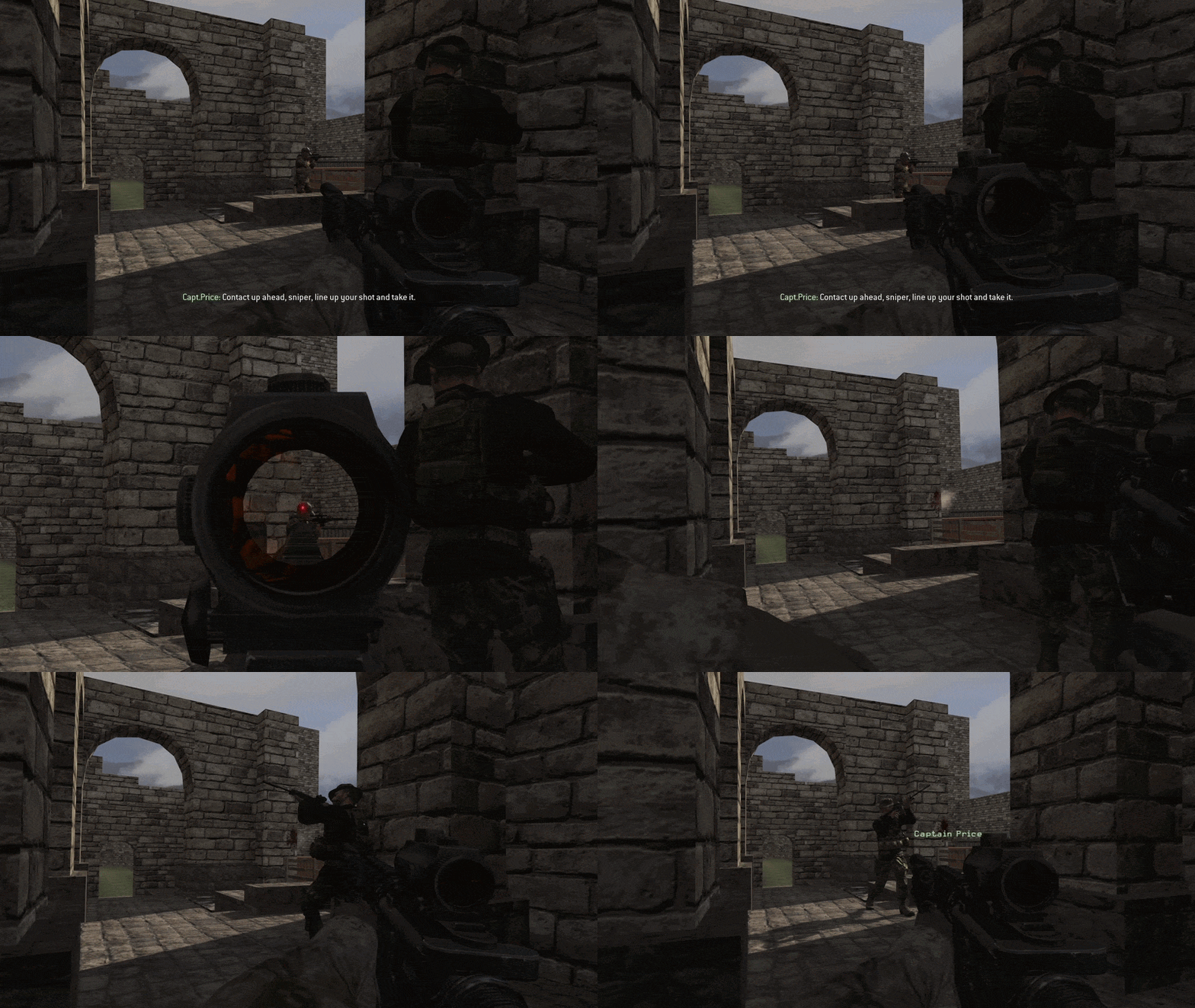
Finally you get the jump on a sniper. This sniper acting as a navigational pointer for Price's position, as he provides you cover for the remainder of the mission.
Fail States:
With a lot of these sequences I wanted to provide player agency on how they would react, having an intended experience, but providing options for those that didn't follow the desired path. Here is a short video with some examples below:
This final combat encounter is setup to allow the player to push forward, whilst still being able to fall back and have Price assist in taking some targets down and drawing fire.
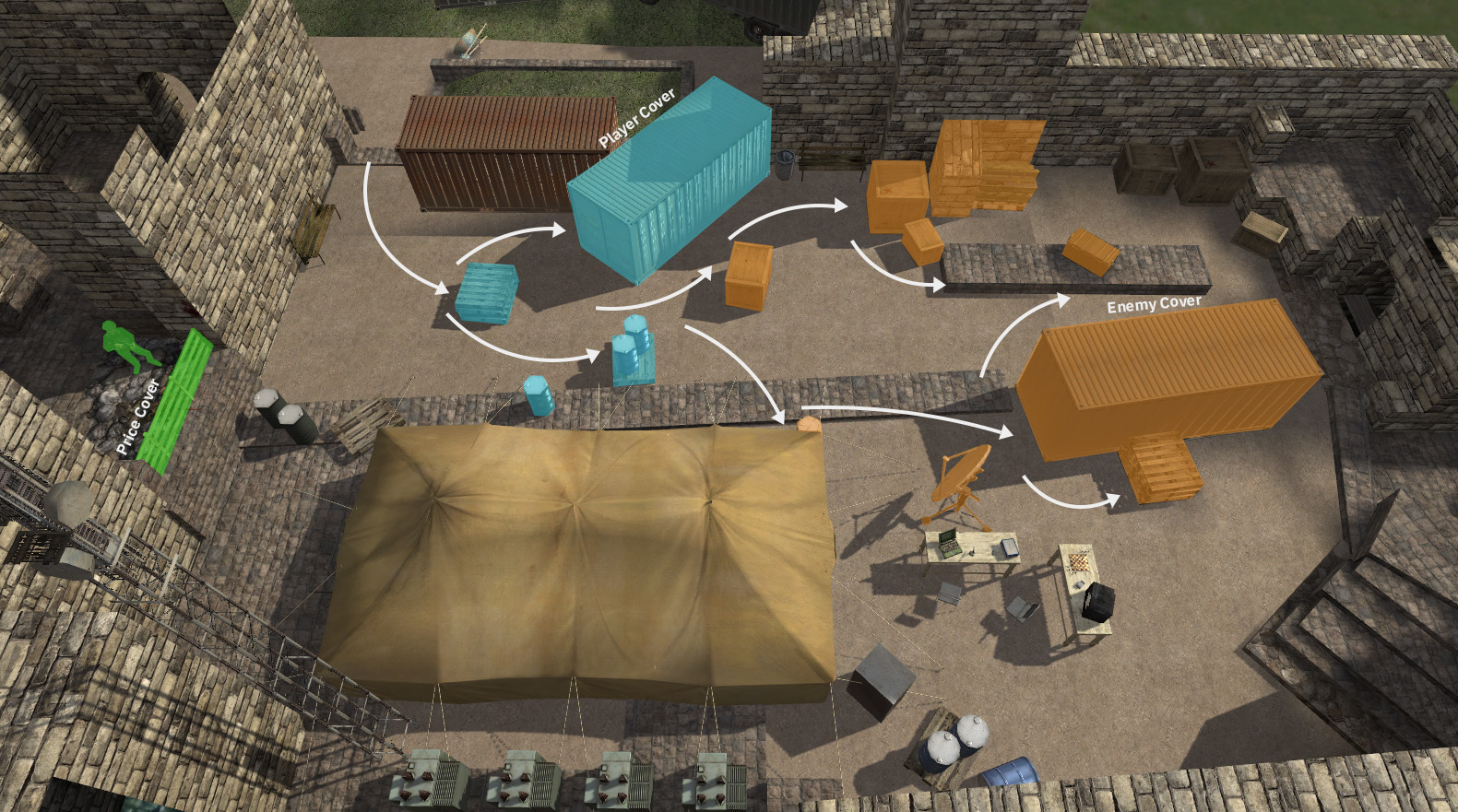
Written script:
Here is a short video on some of the scripting work I've done in this project:
Preproduction
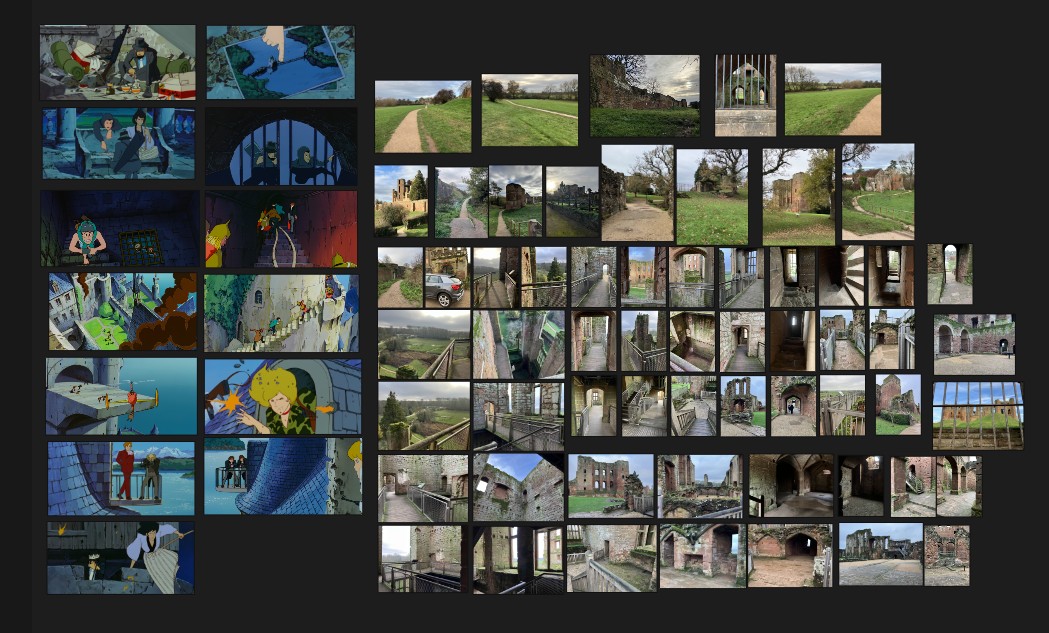
- The main inspiration for this project, outside of Kenilworth Castle, was the film Lupin the Third: The Castle of Cagliostro, featuring a similar 2 man infiltration.
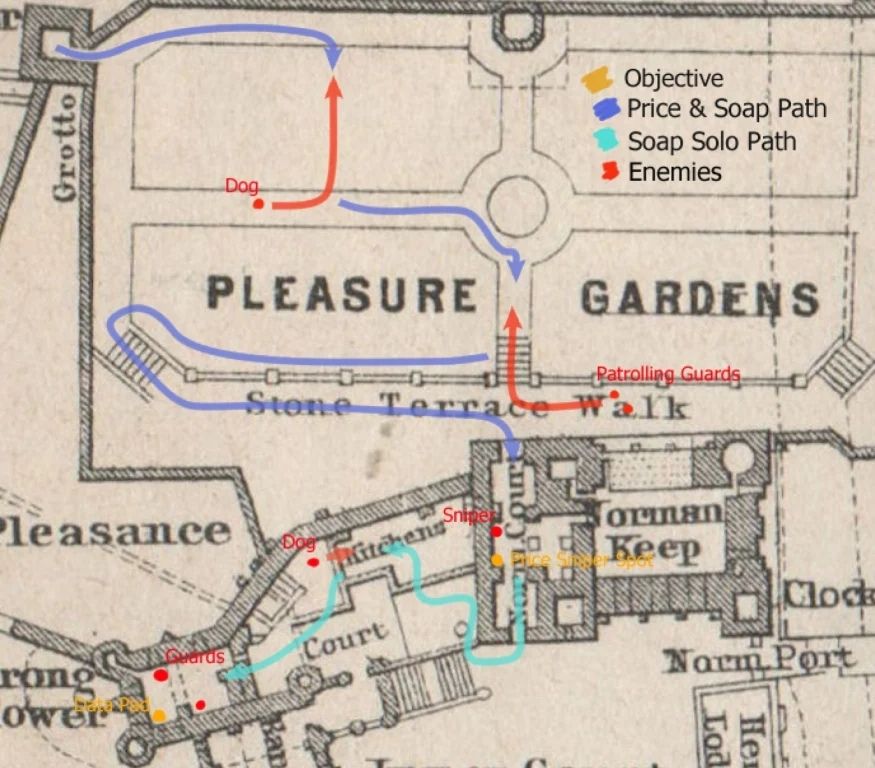
- Using real world paper maps to piece together where I could setup certain sequences, and where I might have to creatively block off access.
Reflection
Looking through developer code to figure out what was a largely undocumented engine gave me a lot of perspective on how industry writes mission script, especially compared to modern tools. Implementing the stealth mechanics from scratch also gave me a much clearer idea on how games create tension and suspense through scripted sequences.
At this point I'm looking to challenge myself in other ways, however if I were to continue working on this project here are some things I would be looking to change:
- Lighting, being under the cover of night would sell the mission a lot more and would allow for the use of lighting in unique ways to guide the player
- More non interactive AI, we have the smoker guard blocking the player however the addition of more patrolling guards as blockers as opposed to random dotted trucks, cars etc. would properly sell the base as a living, breathing place and less like a scripted theme park ride